 Skip to content
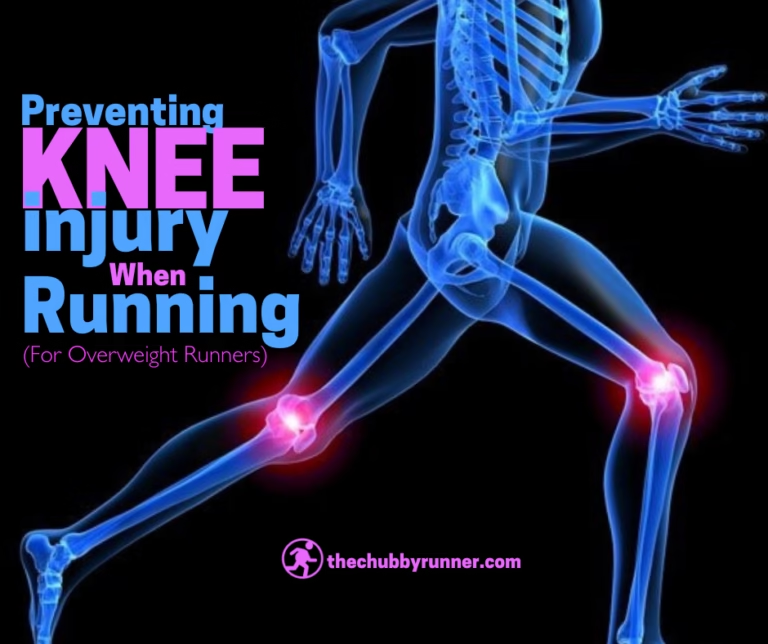
Preventing knee injury when running (for overweight runners)
Knee pain doesn’t just “happen.”
Most of the time, it’s built slowly—through small decisions that stack up:
- Increasing mileage too fast
- Skipping strength work
- Ignoring early warning signs
If you’re an overweight runner, those small mistakes show up faster.
The good news?
That also means prevention works extremely well.
Start Your Beginner Running Plan. How to Start Running When You’re Overweight
Why Prevention Matters More for Overweight Runners
Every step while running places multiple times your body weight through your knees.
That doesn’t mean running is bad—it means:
Your knees need more support, not less activity.
See your step-by-step system to help overweight runners lose weight
1. Control Your Training Progression
This is the #1 cause of knee pain.
Follow this rule:
- Increase mileage by no more than 10% per week
If you skip this, nothing else matters.
2. Strengthen the Right Muscles
Your knees don’t work alone.
Weakness in these areas shifts stress into your knee:
- Glutes (most important)
- Quads
- Calves
Start simple:
- Bodyweight squats
- Glute bridges
- Calf raises
3. Fix Your Running Form (Gradually)
You don’t need perfect form.
But you do need to avoid:
- Overstriding
- Heavy heel slamming
- Slouched posture
Small fixes:
- Shorter strides
- Slight forward lean
- Softer landings
See: Knee Pain in Overweight Runners
4. Wear the Right Shoes
Bad shoes = unnecessary stress.
Replace shoes every:
- 300–500 miles
And choose:
- Cushioned shoes
- Stability if you overpronate
5. Mix Your Training Surfaces
Running only on pavement increases impact stress.
Mix in:
- Trails
- Grass
- Treadmill
6. Don’t Skip Recovery
This is where most runners sabotage themselves.
Recovery includes:
- Rest days
- Stretching
- Sleep
Progress happens between runs, not during them.
Bottom Line on Knee Injury Prevention
Knee pain prevention isn’t complicated.
But it does require discipline:
- Progress slowly
- Build strength
- Listen to your body
Do that—and you dramatically reduce your injury risk.